
Marketing Strategies for Small Businesses
Explore marketing strategies for small businesses, including SEO, local marketing, digital advertising, websites, and ecommerce.
Kevin Farkas
October 12, 2026
5 min read
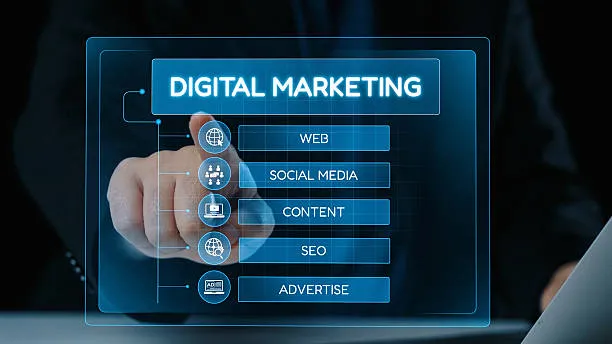
Digital Marketing Services Every Small Business Should Invest In
Marketing strategies for small businesses need to reflect the business, its customers, market, and goals. Small businesses often have limited time and resources, so choosing the right digital marketing services is important. Rather than trying to use every available marketing channel, businesses can focus on the areas that are most relevant to their online presence.
Digital marketing can include search engine optimization, local search, paid advertising, website development, ecommerce, and broader marketing strategy. When developing marketing strategies for small businesses, each service has a different purpose. SEO focuses on organic search visibility, local SEO addresses location-based searches, digital advertising supports paid campaigns, and web development services can address the website experience.
For small businesses, these services can be considered as parts of a broader digital marketing approach. The right combination depends on what the business currently needs and where its customers search for information.
Iron Horse SEO provides digital marketing services that include SEO, Google Business Profile and Local Maps, paid advertising, marketing strategy, ecommerce, and website design and development.
Iron Horse Digital has over 25 years of experience in Digital Marketing, specializing in SEO, Google Business Profile and Local Maps, paid advertising, marketing strategy, ecommerce, and website design and development. Founder, Kevin Farkas, started on the ground floor back in 2000 as one of the first employees at Sephora.com. After 9 years leading the website development for sephora.com, Kevin went on to leadership positions for Levis.com, CharlotteRusse.com & Vice President of Ecommerce at Worldmarket.com. Kevin's credentials can be verified in his LinkedIn Profile.
When you work with Iron Horse Digital, you work with Kevin, not a faceless agency.
Why Small Businesses Need a Focused Digital Marketing Approach
A small business does not necessarily need to be active on every digital platform.
The first step is understanding how customers find the business and what information they need before making a decision. Some businesses rely heavily on local customers. Others sell products online. Some may need to improve their organic search visibility, while others may have a specific advertising campaign they want to support.
This is why marketing strategies for small businesses should be based on individual circumstances rather than a standard checklist.
For example, a local service provider may benefit from focusing on local search and Google Business Profile information. An ecommerce business may need to examine its online store and product experience. Another business may need website improvements before directing additional visitors to the site.
A focused approach helps businesses identify priorities before investing time and resources into individual tactics.
SEO Is an Important Part of Digital Marketing
Search engine optimization can help businesses work toward stronger organic search visibility.
SEO involves more than placing keywords on website pages. It can include technical SEO, keyword research, on-page optimization, content strategy, website audits, local SEO, and ongoing optimization.
For a small business, SEO begins with understanding what potential customers are searching for and whether the website provides useful information related to those searches.
The website also needs to be organized clearly. Important pages should be easy to understand, content should be relevant, and technical factors should be considered as part of the overall optimization process.
SEO is also an ongoing activity. Search results can change, competitors can publish new content, and websites can be updated over time.
Because of this, businesses should not approach SEO as a one-time task. It is better viewed as an area that can be reviewed and improved over time.
SEO Should Reflect the Business
Not every business needs the same SEO strategy.
A local business may have different search priorities from an ecommerce company. A business serving a specific geographic area may need local SEO elements, while another company may focus more heavily on broader organic search.
The strategy should therefore reflect the services, products, audience, and locations relevant to the business.
This makes SEO more useful than simply trying to include as many keywords as possible.
Local SEO Can Support Small Businesses With Defined Service Areas
Local search is particularly relevant to businesses that serve customers in specific geographic locations.
Potential customers may use Google Search or Google Maps to find businesses near them. They may look for business information, services, operating details, website information, or other details before deciding what to do next.
Maintaining accurate local information is therefore an important part of a local digital presence.
Iron Horse SEO provides local SEO services that include Google Business Profile and Local Maps work.
Why Google Business Profile Matters
Google Business Profile allows eligible businesses to manage information that appears through Google's local search services.
Information such as business details, hours, website information, services, photos, and other relevant details can help customers understand a business.
However, local SEO should not be reduced to adding a city name to website content.
A more appropriate approach is to make sure that location-related information accurately reflects the business and the areas it actually serves.
This can include local keywords, location pages, citations, and Google Business Profile optimization, depending on the business.
Digital Advertising Services Can Support Paid Campaigns
Paid advertising is another option available to small businesses.
Digital advertising services can help businesses create campaigns designed to reach selected audiences through advertising platforms.
Iron Horse SEO provides paid advertising services across platforms including Google, Facebook, Instagram, and LinkedIn.
Paid advertising and SEO serve different purposes.
SEO focuses on organic search visibility, while paid advertising involves purchasing advertising placements. Because they work differently, a business may consider them separately or use them as complementary parts of a broader marketing strategy.
When Digital Advertising May Be Relevant
Paid advertising can be considered when a business has a specific campaign, service, product, audience, or marketing objective.
For example, a business may want to promote a particular service or reach a defined audience through a paid campaign.
However, the advertising campaign should connect with the website experience.
If an advertisement sends visitors to a website page, that page should provide information that is relevant to what the advertisement presented.
Campaign performance should also be reviewed. Data from campaigns can help businesses understand what is happening and determine whether changes are appropriate.
No advertising campaign should be treated as guaranteed to produce a particular number of leads, sales, or other outcomes.
Web Development Services Support the Website Experience
A website is often one of the main destinations for people who discover a business online.
Visitors may arrive through organic search, local search, paid advertising, social platforms, or other sources.
Once they arrive, the website should provide useful information and a clear experience.
Iron Horse SEO offers web development services as part of its digital marketing offering, with website design and development focused on responsive, user-friendly websites.
Why Website Development and Marketing Work Together
Marketing and web development are closely connected.
SEO can help potential customers discover website pages. Paid advertising can send visitors to specific landing pages. Local search can direct people toward business information and websites.
The website then becomes part of the customer's online experience.
This does not mean that every small business needs a complete website redesign.
Sometimes a business may need specific improvements rather than a full rebuild. The appropriate decision depends on the current website, its performance, its usability, and the business's objectives.
Ecommerce Businesses Have Different Digital Marketing Needs
Businesses that sell products online have additional considerations.
An ecommerce website needs to help customers find products, understand product information, navigate the store, and move through the online shopping experience.
Marketing and ecommerce therefore need to work together.
Ecommerce Optimization Can Support Online Stores
Iron Horse SEO provides ecommerce services that include building and optimizing ecommerce stores, with attention to areas such as user experience, product visibility, design, and marketing strategies.
The priorities can vary between ecommerce businesses.
One online store may need to review its product organization. Another may need to look at website usability or how marketing activities connect with its online store.
There is no single optimization checklist that applies to every ecommerce business.
Instead, ecommerce work should be based on the individual store and the areas that need attention.
Marketing Strategies for Small Businesses Should Start With Priorities
A small business may have several areas that could be improved.
However, trying to address everything simultaneously may make it difficult to establish clear priorities.
Marketing strategies for small businesses should therefore begin by identifying what matters most.
A business can consider questions such as:
What products or services are most important?
Who is the business trying to reach?
Where do potential customers search?
Does the business depend on local customers?
Does the current website provide the necessary information?
Is the business selling products online?
Are paid advertising campaigns part of the current marketing plan?
Which areas of the online presence need the most attention?
These questions can help establish a starting point.
Different Businesses Need Different Priorities
A local business may focus on SEO and local search.
An ecommerce company may prioritize its online store and product experience.
A business with an established website may need specific improvements rather than a complete rebuild.
Another business may have a particular campaign that makes paid advertising relevant.
The important point is that digital marketing should reflect the business rather than follow a generic formula.
How Digital Marketing Services Work Together
Digital marketing services can address different parts of the same customer journey.
For example, SEO can help people discover relevant website content through organic search. Local SEO can support visibility for location-based searches. Paid advertising can place campaigns in front of selected audiences. Website development can support the experience after visitors arrive.
Marketing strategy provides a way to organize these activities.
This can help prevent individual services from operating without a clear purpose.
| Digital marketing service | Primary focus | How it can fit a small-business strategy |
|---|---|---|
| SEO | Organic search visibility | Helps relevant website content become discoverable through search |
| Local SEO | Location-based visibility | Supports businesses serving specific geographic areas |
| Google Business Profile | Local business information | Helps manage relevant information available through Google |
| Digital advertising | Paid campaigns | Supports campaigns aimed at selected audiences |
| Marketing strategy | Planning and prioritization | Helps determine which marketing areas deserve attention |
| Web development | Website experience | Supports the structure and usability of the business website |
| Ecommerce | Online store experience | Addresses product visibility, usability, design, and ecommerce needs |
The table also shows why businesses should evaluate services individually.
A service can be useful without being necessary for every business.
Choosing a Digital Marketing Company in Walnut Creek
Businesses searching for a digital marketing company in Walnut Creek should consider whether the company provides services that match their actual needs.
The range of services is one consideration.
Iron Horse SEO provides services across SEO, local search, Google Business Profile and Local Maps, paid advertising, marketing strategy, ecommerce, and website design and development.
Businesses should also consider how the agency approaches strategy and implementation.
A clear process can make it easier to understand why certain services are being recommended.
Look for a Relevant Approach
An agency should understand that a local service business, ecommerce store, and professional service company may have different digital marketing requirements.
The strategy should therefore be based on the business's audience, market, services, location, website, and objectives.
Consider How Performance Is Reviewed
Measurement is another important part of digital marketing.
Businesses should have a way to review performance and determine whether adjustments are needed.
Iron Horse SEO describes its process through Strategy, Action, and Measure. This approach involves understanding the business and its goals, implementing relevant marketing activities, and reviewing performance to inform future decisions.
Measurement does not mean promising a particular outcome.
Search visibility, advertising performance, traffic, and other marketing indicators can be influenced by competition, customer behavior, market conditions, website factors, budgets, and implementation.
Reviewing performance simply provides information that can be used when making future marketing decisions.
Why Small Businesses Should Avoid One-Size-Fits-All Marketing
A generic marketing plan may not address the actual needs of a small business.
For example, a local business may have no reason to prioritize ecommerce services. An ecommerce company may have different needs from a business that primarily receives customers through local search.
Even two businesses in the same industry can have different marketing priorities.
Their locations, websites, competitors, customer behavior, and business goals may differ.
This is why a more useful approach starts with the business itself.
The strategy can then determine which services are relevant and how those services should be implemented.
Building a Practical Digital Marketing Plan
A practical digital marketing plan can begin with a review of the current online presence.
Businesses can look at their website, search visibility, local presence, advertising activity, ecommerce experience, and existing marketing strategy.
From there, priorities can be established.
The next step is implementation.
This may involve SEO improvements, local SEO work, website development, paid advertising, ecommerce optimization, or other relevant activities.
The final step is measurement.
Performance information can help determine what is working, what needs attention, and whether the strategy should be adjusted.
This creates a cycle rather than a one-time marketing project.
Conclusion
Small businesses have many digital marketing options available to them, but not every business needs every service.
The most useful approach is to understand the business first and then identify the marketing activities that are relevant to its customers, market, location, website, and objectives.
Marketing strategies for small businesses can include SEO, local search, Google Business Profile, digital advertising services, web development services, ecommerce, and broader marketing strategy. Each area has a different role, and the right combination depends on the individual business.
Iron Horse SEO provides digital marketing services across these areas, with a focus on creating strategies that connect planning, implementation, and measurement.
If you want to discuss your business's digital marketing needs and determine which services may be relevant to your goals, contact us today.
Frequently Asked Questions
What are marketing strategies for small businesses?
Marketing strategies for small businesses are plans that help determine which marketing activities are relevant based on the business's customers, market, goals, online presence, and available resources.
Which digital markeAting services can small businesses use?
Depending on their needs, small businesses can consider services such as SEO, local SEO, Google Business Profile, paid advertising, website development, ecommerce, and marketing strategy.
What are digital advertising services?
Digital advertising services involve planning and managing paid advertising campaigns through digital platforms. The appropriate platform and campaign approach depend on the business and its marketing objectives.
Why does a small business need a website?
A website can provide customers with information about a business, its services, products, locations, and other relevant details. It can also serve as a destination for visitors who arrive through search or advertising.
What are web development services?
Web development services involve creating, improving, or maintaining websites. For small businesses, website development can address areas such as responsiveness, usability, structure, and the overall website experience.
Does every small business need paid advertising?
No. Paid advertising is one option within digital marketing. Whether it is appropriate depends on the business, its goals, audience, campaign needs, and overall marketing strategy.
How should a small business decide which digital marketing services to use?
A business can begin by reviewing its current online presence, customers, market, website, local visibility, and objectives. These factors can help determine which marketing areas deserve priority.

Contra Costa County SEO
Alameda County SEO
Company


© Copyright 2026. Iron Horse Digital. All Rights Reserved.